
What Every Family Should Have in a First Aid Kit

When something happens at home, a fall, a burn, a bleed or a bump there’s no time to go searching for supplies. You want to know that your first aid kit is well stocked and organised so everything is easy to find.
A well-stocked first aid kit doesn’t need to be complicated or expensive. It just needs to be practical, accessible, and ready when you need it.
Why a home first aid kit matters
Most illnesses and injuries involving children happen in and around the home. Cuts, burns, fevers, falls they’re common, and often happen quickly.
Having a first aid kit within reach means you can respond early, reduce harm, and stay calm while you decide what to do next. Its easy to become overwhelmed with all the items that are reccomended for parents, but the reality is there are just a few key items that you will using on repeat and some very important ones to have (but hope to never use).
The essentials every family should have
Lets start with the basics, these will cover most everyday situations
Wound care
Adhesive bandages (various sizes)
Sterile gauze pads and non-stick dressings
Medical tape
Antiseptic wipes or solution
Splinter removal probes
Bleeding and injury
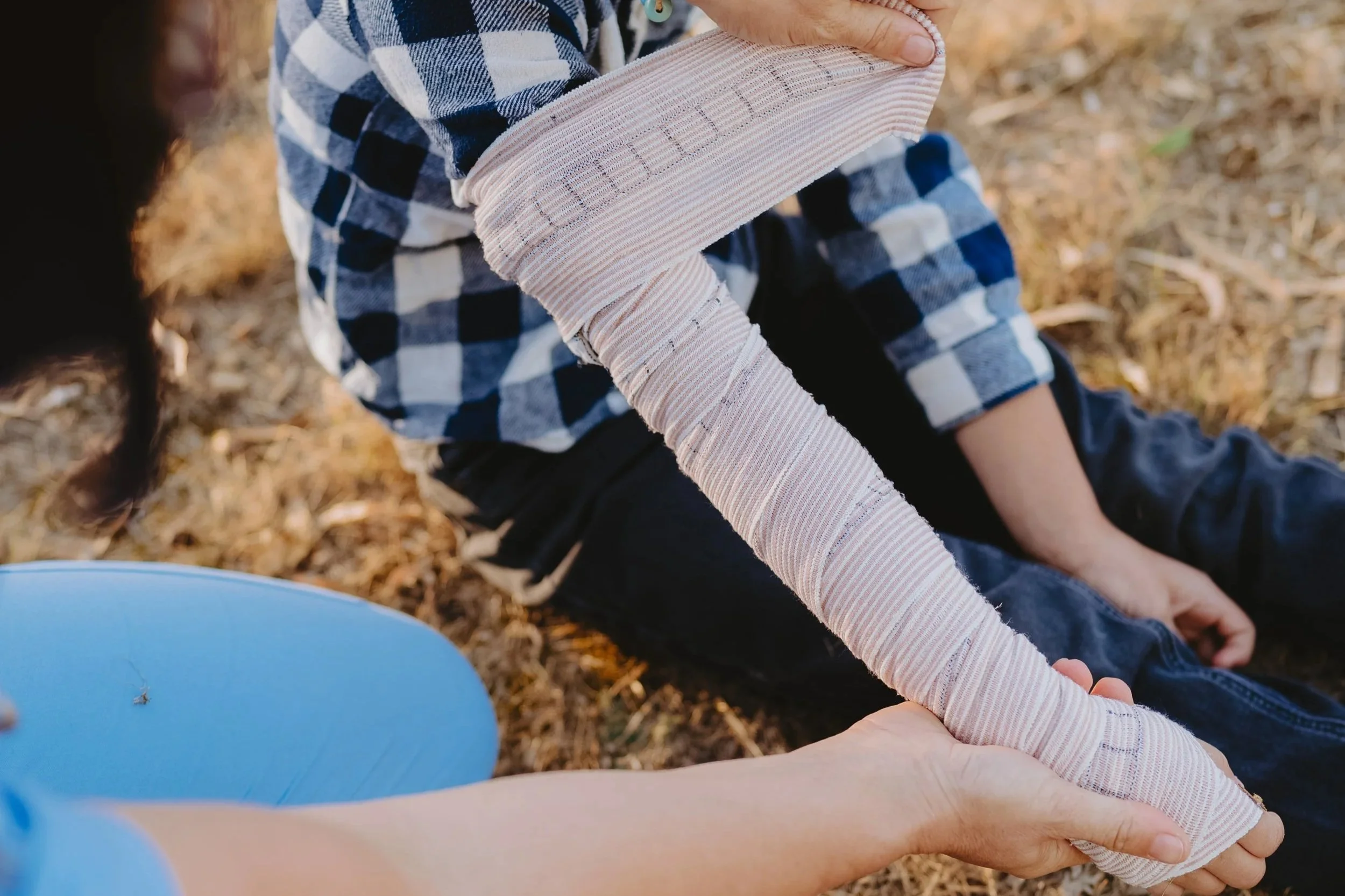
Compression bandage (for bleeding or snake bite)
Crepe bandages (for support and sprains)
Triangular bandage (for slings and immobilisation)
Disposable gloves
Burns
Burn gel
Burn sheet
Remember: cool running water for 20 minutes is the most important first step
Eye care and irrigation
Saline solution (for cleaning wounds or eyes)
Eye pads
Tools
Scissors
Tweezers
Digital thermometer
Other helpful items
CPR face shield or mask
Instant cold pack
Notepad and pen
Small waste bags
Medications (if used safely)
Paracetamol and/or ibuprofen (age-appropriate)
Oral rehydration solution
Any prescribed medications (e.g. inhaler, adrenaline autoinjector)
Keep medications clearly labelled, stored safely out of reach of children, and always check correct dosing.
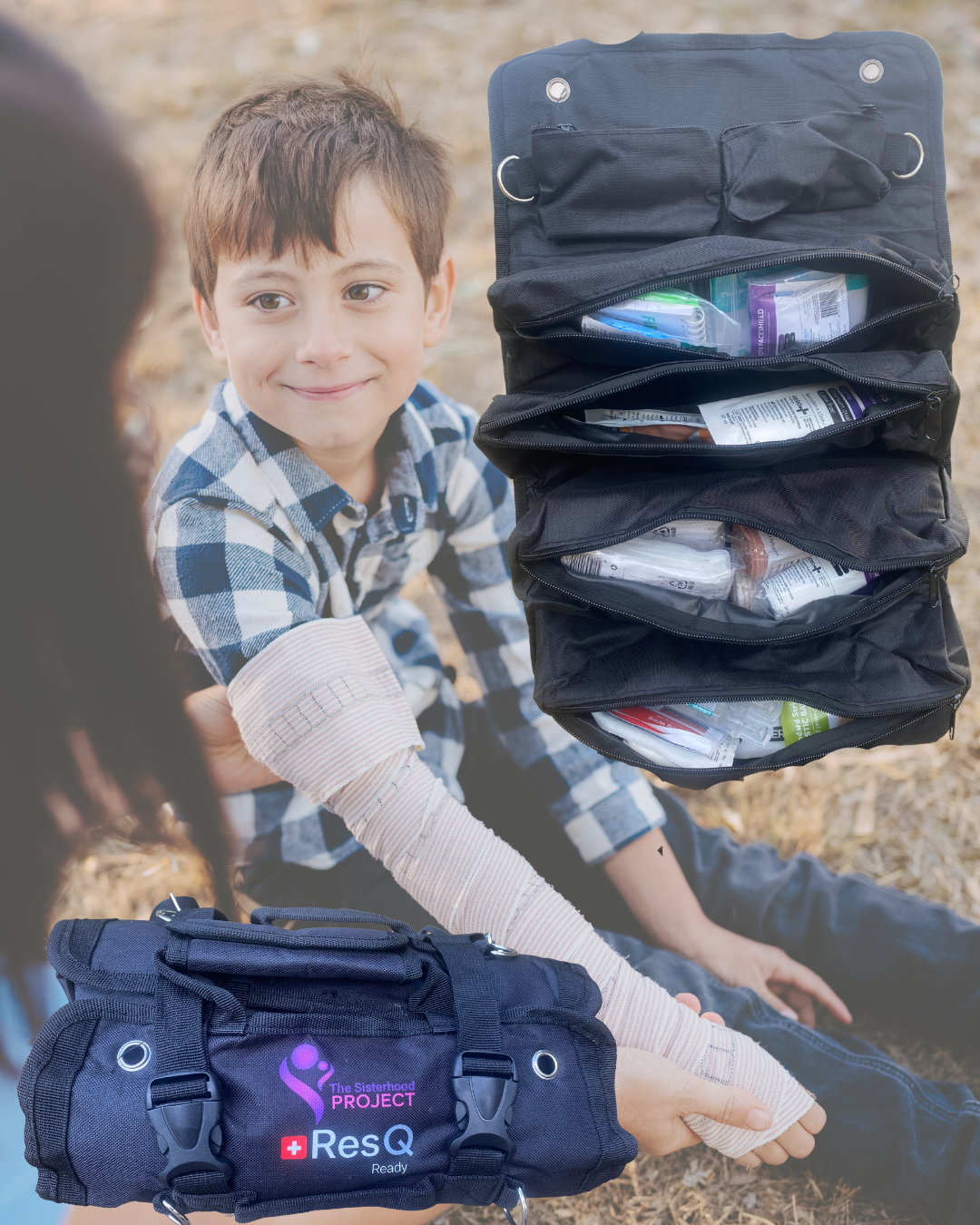
For families with babies and young children
A few additional items can make a big difference:
Infant-friendly pain relief options
Saline for nasal or eye use
Syringe or medicine cup for accurate dosing
Soft cloths or gauze for gentle cleaning
For outdoor and rural families
If you live or spend time in rural areas, consider adding:
Snake bite bandage (firm compression bandage)
Extra saline or clean water for irrigation
Emergency blanket
What people often forget
Some of the most important parts of a first aid kit aren’t equipment:
A charged phone
Emergency numbers saved and accessible
A simple plan for what to do and when to seek help
Because knowing when and how to get help is just as important as the first aid itself.
Keep it up to date
A first aid kit isn’t “set and forget.”
✔️ Check expiry dates every 6–12 months
✔️ Replace used items straight away
✔️ Make sure everything is easy to find
If it’s buried in the back of a cupboard, it won’t help you when you need it.
A simple starting point
If you’re not sure where to begin, start small. Build your kit over time. Keep it somewhere easy to reach.
Download our free first aid checklist here
